
One of the most common questions we receive from parents is this:
“Doctor, my child’s new tooth is growing behind the baby tooth. Is this normal? Do we need to remove the baby tooth?”
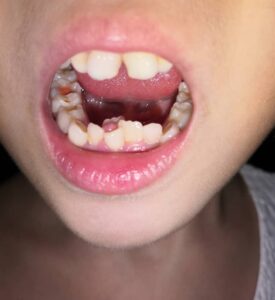
If you’ve noticed a new lower front tooth erupting from the back (tongue side) of your child’s baby tooth, don’t panic—you’re not alone, and in most cases, this is completely normal.
Understanding the First Permanent Lower Incisor
The first permanent lower incisors usually erupt around the age of 6–7 years old. Unlike baby teeth, permanent teeth often take a slightly different path as they come in. The permanent incisor may erupt lingually (behind) the baby tooth instead of directly underneath it.
This phenomenon is often referred to as “shark teeth”, and while it can look worrying, it is usually a transitional stage.
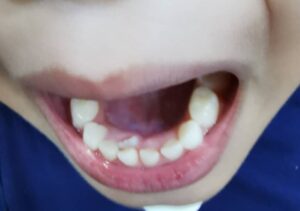
Do Baby Teeth Need to Be Extracted?
In many cases, no extraction is needed.
As the permanent tooth continues to erupt, it usually stimulates the baby tooth root to resorb naturally. Once the baby tooth becomes loose and eventually falls out, the tongue and lip pressure will help guide the permanent tooth into a more favourable position over time.
However, extraction may be considered if:
-
The baby tooth is not loose at all
-
The permanent tooth is fully erupted but severely displaced
-
There is pain, infection, or hygiene difficulty
-
There is limited space causing crowding
Every child is different, which is why proper assessment is important.
When Should Parents Be Concerned?
You should bring your child for a dental check-up if:
-
Both baby teeth are still firm months after the permanent teeth erupt
-
Your child experiences discomfort or difficulty cleaning the area
-
You’re unsure whether the alignment will self-correct
Early evaluation allows us to monitor the situation and intervene only if necessary.

The Takeaway for Parents
Seeing a permanent tooth erupt behind a baby tooth can be alarming, but in most cases, it’s a normal part of dental development. Observation, patience, and regular dental reviews are often all that’s needed.
If you’re ever unsure, we’re always happy to assess and guide you—because peace of mind for parents matters just as much as healthy smiles for children.